When you shop for common household LED lights like A-style bulbs, you may oftentimes see NOT DIMMABLE listed under the product description. The reason that some LED bulbs are not dimmable is due to the fact that the electrical circuitry inside the LED bulb is not designed to be able to interpret the dimming signal of a wall dimmer, which, in turn, is/was designed for a traditional incandescent bulb.
On the other hand, LED strips are not designed to be connected directly to line voltage (e.g. a 120V AC wall socket), and require a power supply to convert the higher voltage AC into a lower 12V or 24V DC voltage.
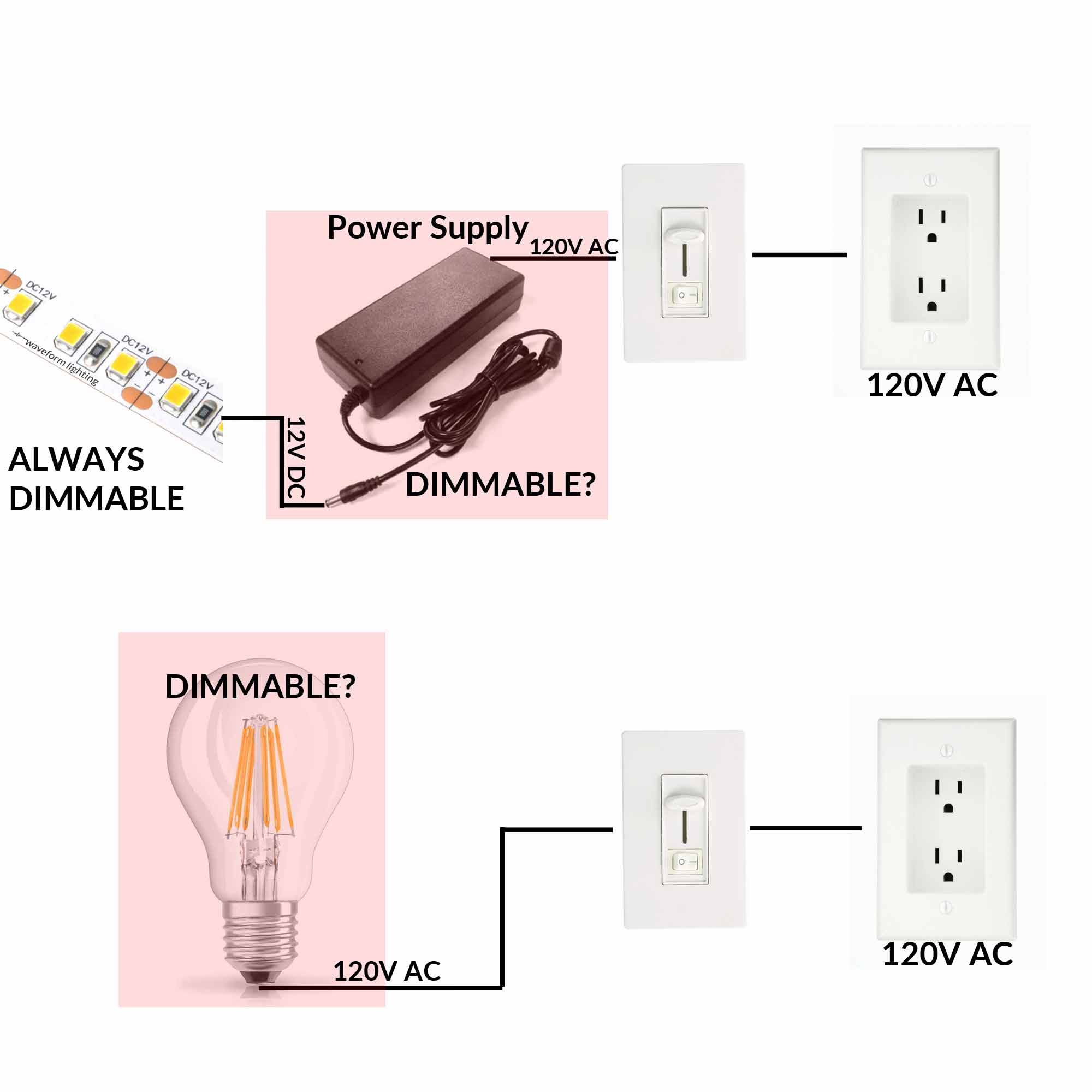
Therefore, if a wall dimmer is involved, it must first "talk" to the power supply before any dimming can happen at the LED strip. Therefore, the dimmable/not dimmable question depends on the power supply unit, and whether it can interpret the dimming signal produced by the wall-dimmer.
Option 1: Using a Traditional TRIAC Wall Dimmer + TRIAC Dimmable Power Supply
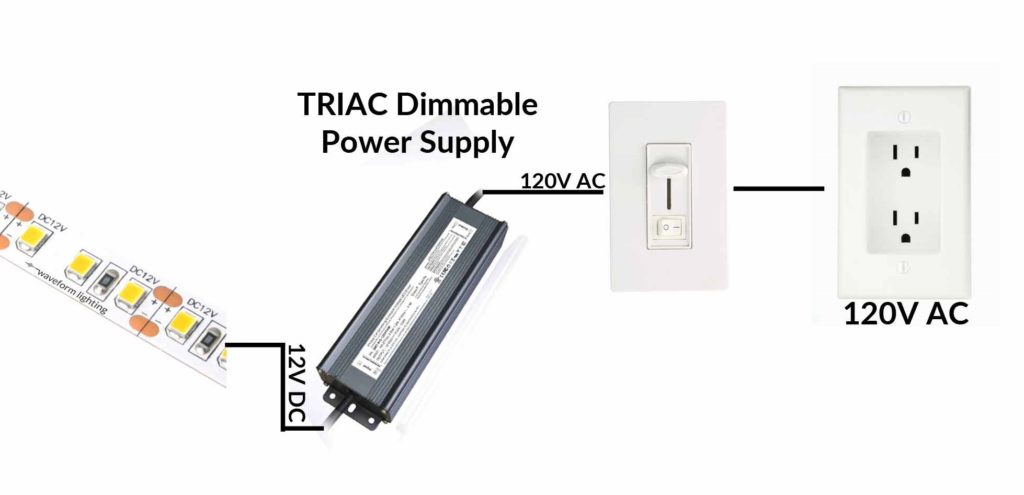
The TRIAC dimmable power supply has a dual function here -
1) reduce and rectify the 120V AC signal to a 12/24V DC signal compatible with the LED strip, and
2) interpret any TRIAC dimming signals produced by the wall dimmer, and then translate that into the corresponding LED strip light output.
Keep in mind that any solution that involves a wall dimmer, including this one, involves hard-wiring connections to mains electricity and should be only performed only by qualified and licensed individuals. Always follow safety precautions when performing electrical work!
Option 2: Use a Low-Voltage DC PWM Dimmer
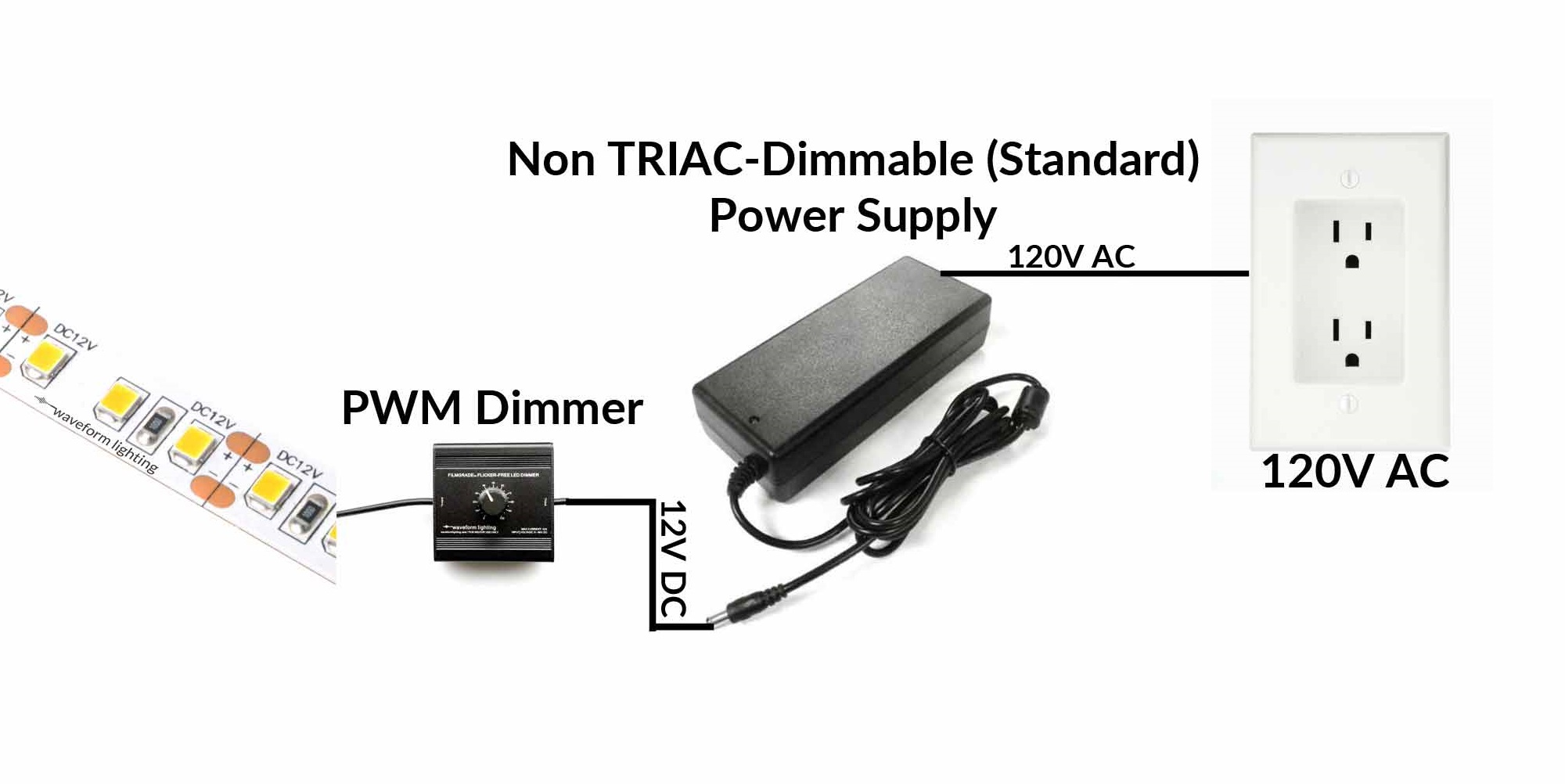
Intimidated by the prospect of messing up the wiring in your walls? No problem - another option allows you to use components that only draw power from a regular wall output.
A DC PWM LED strip dimmer can be installed between a standard, non-TRIAC dimamble power supply, and the LED strip. It usually consists of a turn dial (potentiometer) that adjusts the LED strip brightness.
This is a very simple circuit design that will work well for smaller or portable installations where the dimmer does not need to be built into the wall. Unlike TRIAC dimamble power supplies, these standard power supplies will typically include standard 2-prong plugs that plug into any wall outlet.
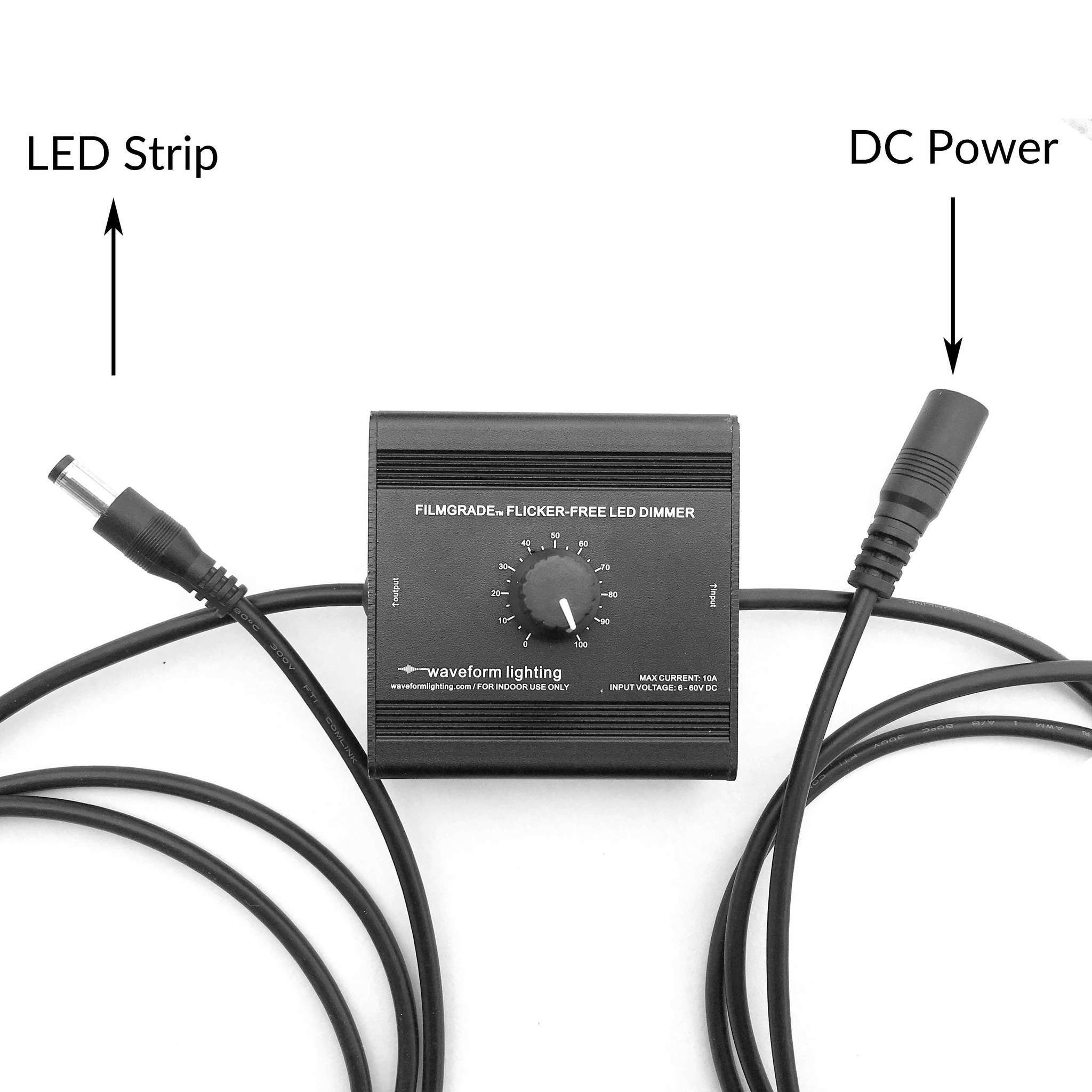
Also, another significant disadvantage of this approach is that the PWM dimmer must be placed relatively close to the LED strip. This is due to a phenomenon called voltage drop that is primarily an issue with low voltage DC applications only. A wall dimmer approach (Option 1) would allow you to avoid this.
With many variable components and combination, we strongly recommend testing for compatibility prior to any permanent or large scale build. Sometimes, unexpected issues like non-linear dimming or flickering can occur, and it is best to catch these issues as early as possible.